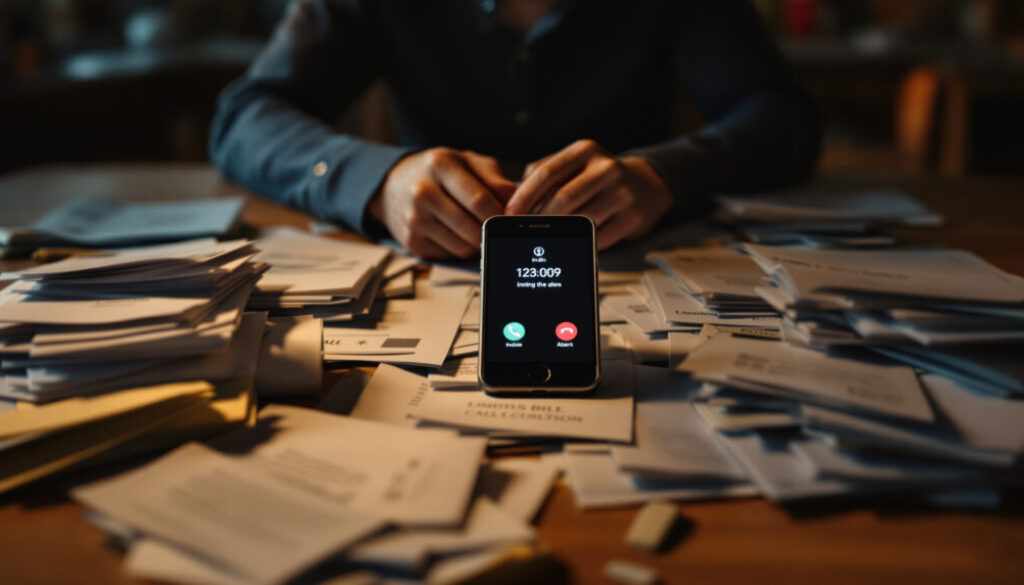
Harassment from Debt Collectors After an Accident in Michigan

Key Takeaways
Michigan accident victims waiting on injury settlements often face aggressive debt collection calls on medical bills that should ultimately be covered by a settlement or insurance payout. Federal and state law give you the right to demand collectors stop contact, dispute debts, and take legal action against collectors who violate those rights while your claim is pending.
- The Fair Debt Collection Practices Act (FDCPA) prohibits abusive, deceptive, and harassing tactics by third-party debt collectors.
- You can send a written cease-communication letter that legally requires collectors to stop calling you.
- Michigan’s Regulation of Collection Practices Act adds a second layer of protection beyond federal law.
- Medical bills from an accident are often recoverable as part of your personal injury settlement, meaning collectors may be contacting you prematurely.
- Violations of the FDCPA can entitle you to statutory damages, actual damages, and attorney fees.
Why Debt Collectors Call Accident Victims Before Settlements Are Resolved
When a serious accident sends you to the emergency room, the medical bills start arriving before you have had a single conversation with an insurance adjuster. Hospitals and medical providers frequently sell unpaid accounts to third-party collection agencies within weeks of treatment, and those agencies are not concerned with the status of your personal injury claim. They want payment now. For Michigan accident victims navigating the claims process, these calls arrive at the worst possible time, piling financial stress on top of physical pain and emotional upheaval. The reality is that the debt may be entirely recoverable through your eventual settlement, but collectors have no obligation to wait. Understanding why this happens, and what you can do about it, puts the power back in your hands. If you are unsure whether you even have grounds to pursue a claim, learning more about your legal rights in Michigan is a valuable first step toward understanding your options.
Your Federal Rights Under the FDCPA
The Fair Debt Collection Practices Act, enforced by the Federal Trade Commission, is one of the most important tools available to accident victims facing collector harassment. Passed by Congress in 1977 and regularly updated, the FDCPA applies to third-party collection agencies, not original creditors like hospitals collecting their own bills. Under this law, collectors cannot call you before 8 a.m. or after 9 p.m., cannot call your workplace if you tell them it is inconvenient, and cannot use obscene, threatening, or abusive language. They cannot falsely claim to be attorneys or government officials. They cannot threaten legal action they do not intend to take. Critically, if you send a written request demanding they stop all contact, they must comply. The only exceptions are a single communication confirming they will stop, or notifying you of a specific action like a lawsuit. “Debt collectors frequently rely on consumers not knowing their rights,” says consumer protection attorney and National Consumer Law Center contributor Chi Chi Wu. “The moment you assert those rights in writing, the rules change dramatically in your favor.”
Michigan’s Additional Layer of Protection

Michigan accident victims have a second shield beyond federal law. The Michigan Regulation of Collection Practices Act (RCPA), found at MCL 445.251, covers original creditors and collection agencies alike, which closes the gap left by the FDCPA. Under the Michigan RCPA, no collector, whether it is the hospital itself or a third-party agency, can communicate with you in a way that is misleading, harassing, or that misrepresents the character or amount of a debt. The statute prohibits making inaccurate or misleading representations about the consequences of not paying, contacting you at unreasonable times, and using profane or abusive language. Violations carry civil penalties, and you may pursue actual damages, statutory damages of up to $150 per violation, and attorney fees. “Michigan’s collection statute is broader in scope than the FDCPA because it reaches the original creditor,” notes consumer law practitioner and Michigan State Bar member commentary from legal advocates who have analyzed the statute. This means that even if the hospital’s own billing department is the one calling you repeatedly, you still have legal recourse. Victims of due process violations in Michigan face similar challenges when institutions fail to respect their legal rights, and the same principle of asserting your protections firmly applies.
How to Stop Collector Contact While Your Claim Is Pending
Stopping collection calls while your personal injury claim is being resolved is straightforward when you follow the right steps. First, send a written cease-communication letter via certified mail with return receipt requested. Address it to the collection agency, include your account number if you have it, and state clearly that you are invoking your rights under the FDCPA and Michigan RCPA and that the agency must cease all further contact. Keep a copy of the letter and the mailing receipt. Second, document every contact the collector makes before and after the letter arrives. Note the date, time, phone number, name of the caller if provided, and what was said. This record becomes evidence if the collector continues contact in violation of the law. Third, notify your personal injury attorney immediately. Your attorney can communicate directly with the collection agency on your behalf, assert your legal protections, and in some cases negotiate with the original medical provider to hold the account until the settlement is paid. “The most effective thing an accident victim can do early in the process is get an attorney involved before the debt spirals out of control,” says consumer rights attorney and NCLC associate author April Kuehnhoff. Understanding how to choose a car accident lawyer in Michigan can help you find representation that will manage both the injury claim and the pressure from collectors simultaneously. Your attorney can also place the collector on notice that any lien or settlement funds will address the medical debt at resolution.
What Collectors Cannot Do and What Happens When They Break the Rules
When collectors violate the FDCPA or Michigan RCPA, the consequences are not trivial. Under the FDCPA, you can sue in federal or state court within one year of the violation and recover up to $1,000 in statutory damages per lawsuit, actual damages for financial harm or emotional distress, and attorney fees if you prevail. Class action suits can bring up to $500,000 in aggregate statutory damages. Under the Michigan RCPA, individual violations carry $50 to $150 in statutory damages per violation, and multiple calls after a cease-communication letter could mean multiple violations. Collectors know these penalties exist, and a well-documented complaint often leads to a negotiated resolution quickly. Sample Scenario: An accident victim in Flint receives 15 calls in 30 days from a collection agency despite sending a certified cease-communication letter. Each call after the letter arrived could constitute a separate violation of the FDCPA, potentially resulting in significant statutory damages and attorney fee recovery in addition to the ongoing personal injury claim. Residents dealing with collection pressure while waiting on a hit-and-run claim in Flint face an especially difficult combination of delayed insurance payments and aggressive collector contact. Filing a complaint with the Consumer Financial Protection Bureau and the Michigan Attorney General’s office also creates an official record that strengthens any subsequent lawsuit.
Frequently Asked Questions
Can a debt collector contact me about medical bills while my accident case is still open?
Yes, collectors can legally attempt to collect medical debts regardless of whether you have a pending personal injury claim. They have no legal obligation to wait for your settlement. However, you have the right to send a written cease-communication demand under the FDCPA and Michigan RCPA, which requires them to stop calling once the letter is received. For more information on debt collection practices, consult resources from the National Institutes of Health or consumer protection agencies.
Does sending a cease-communication letter affect my credit score?
Sending a cease-communication letter does not, by itself, affect your credit. However, if the collector reports the account to credit bureaus or obtains a judgment against you, that can appear on your report. Your personal injury attorney can often negotiate with the original provider to delay adverse credit reporting while your claim is being resolved.
What if the hospital itself, not a collection agency, is calling me?
If the hospital’s own billing department is contacting you, the FDCPA may not apply because it covers third-party coll