Car Accident Claims in Genesee County Michigan: What To Do
Key Takeaways
Car accident claims in Genesee County Michigan follow Michigan’s no-fault insurance system, which means your own insurer pays your initial medical and wage loss benefits regardless of fault. However, serious injury cases allow you to step outside no-fault and sue the at-fault driver directly. Acting fast, preserving evidence, and understanding your deadlines are critical to protecting your right to full compensation.
- Call 911, get medical care, and document the scene with photos and witness information immediately after any crash.
- Michigan no-fault law requires your own insurer to cover medical bills and 85% of lost wages up to statutory limits, regardless of who caused the crash.
- You have three years from the date of the accident to file a personal injury lawsuit in Michigan, but key deadlines can be much shorter.
- Threshold injuries (death, serious impairment of body function, or permanent disfigurement) allow you to pursue a third-party lawsuit against the at-fault driver.
- Insurance adjusters work to minimize payouts; recorded statements and early settlements can forfeit significant compensation.
- A Flint personal injury attorney can evaluate your claim, handle insurer communications, and identify all liable parties before evidence disappears.
- Contacting legal counsel within days, not weeks, of the accident preserves your strongest possible case.
Car Accidents in Genesee County Change Lives in Seconds
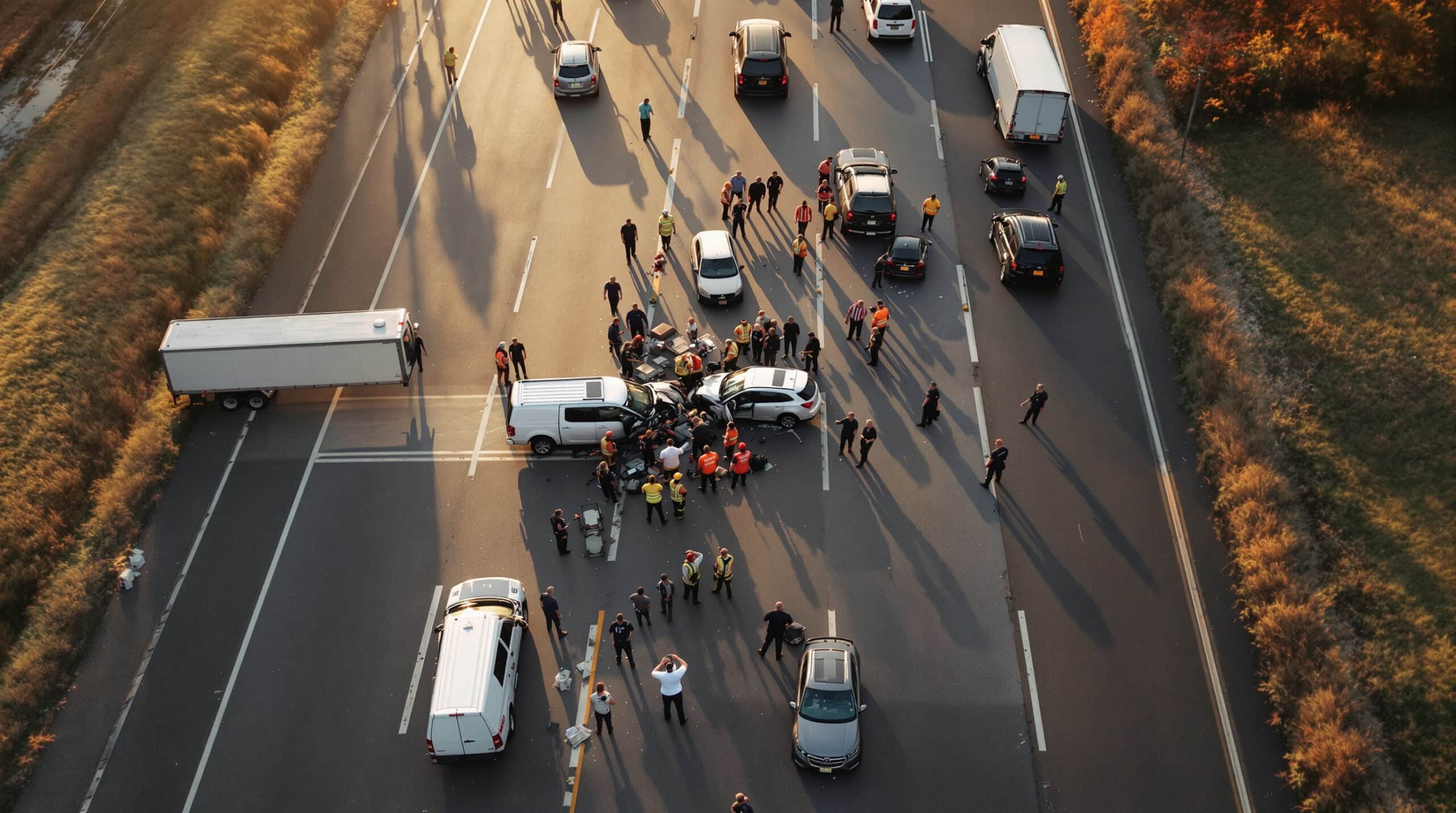
Car accident claims in Genesee County Michigan are more complex than most residents realize, particularly because Michigan operates under a unique no-fault insurance framework that governs who pays what and when. A crash on I-69, Miller Road, or Dort Highway can leave you dealing with fractured bones, lost income, totaled vehicles, and an insurance system that feels designed to confuse rather than compensate.
Genesee County sees thousands of reported traffic crashes each year, including fatal collisions, serious injuries, and property-damage-only accidents across its 637 square miles of urban, suburban, and rural roads. The Michigan State Police Traffic Crash Reporting Unit tracks these incidents, and data consistently shows that intersections in Flint and on major county corridors account for a disproportionate share of serious crashes. Weather, road conditions, distracted driving, and impaired operation all contribute to collisions that upend families overnight. Drivers should be especially cautious at the most dangerous intersections in Flint and Genesee County, where crash rates are consistently elevated.
Understanding what to do in the minutes, hours, and weeks after a crash is not a bureaucratic exercise. It is a financial and legal lifeline. Michigan’s no-fault system provides real benefits, but only if you claim them correctly and on time. For crashes involving catastrophic injuries or death, a third-party lawsuit against the at-fault driver may recover damages that no-fault simply does not cover, including pain and suffering. The steps you take right after an accident directly determine how much of that compensation you can actually reach.

What To Do at the Scene of a Genesee County Car Accident
The moments immediately after a crash are disorienting, but the actions you take in those first 10 to 30 minutes create the foundation of any future claim. Move to safety if possible, then call 911. A police report is not just a formality; it is often the primary official record of how the crash occurred, and Michigan courts and insurers rely on it heavily.
Should you call police for a minor fender-bender in Genesee County?
Yes. Under Michigan law, crashes resulting in injury, death, or property damage that renders a vehicle inoperable must be reported. Even when damage looks minor, calling police creates an independent record that is far harder for an opposing insurer to dispute than your personal account alone. Request the report number before leaving the scene so you can obtain the full report later.
What should you photograph and document at the crash scene?
Photograph every vehicle involved from multiple angles, capturing damage, license plates, and positions relative to lane markings and traffic signals. Document skid marks, debris fields, road defects, and any traffic control devices. Take wide shots showing the overall scene, then close-up shots of specific damage points. Note the exact time, weather conditions, and lighting. Collect names, phone numbers, driver’s license numbers, and insurance information from all drivers. Get contact information from any witnesses before they leave, because witness recollections fade quickly and people become difficult to locate within days.
When should you seek medical care after a crash in Genesee County?
Seek medical care immediately, even if you feel fine. Adrenaline masks pain. Injuries like traumatic brain injuries, internal bleeding, soft tissue damage, and spinal injuries may not produce obvious symptoms for 24 to 72 hours. Visiting a hospital emergency room or urgent care clinic the same day creates a medical record that links your injuries directly to the accident, which is critical for both your no-fault claim and any potential lawsuit. Delayed treatment gives insurers grounds to argue your injuries were caused by something other than the crash. Victims who have suffered a head injury should also review the TBI claim process to understand how to document and pursue compensation for brain injuries. For more information on treating injuries, consult the National Institutes of Health for medical resources.
Michigan No-Fault Insurance and How It Affects Your Claim
Michigan operates under a mandatory no-fault insurance system governed by the Michigan No-Fault Act, MCL 500.3101 et seq. Under no-fault, your own auto insurer pays your Personal Injury Protection (PIP) benefits regardless of who caused the accident. This covers medical expenses, 85% of lost wages up to a statutory cap, replacement service expenses (such as household tasks you can no longer perform), and funeral and burial costs in fatal crashes.
What PIP coverage levels exist under Michigan’s 2019 no-fault reforms?
Michigan’s 2019 no-fault reform (Public Act 21 of 2019) created tiered PIP medical coverage options. Drivers can now elect unlimited lifetime medical benefits (the previous default), $500,000 per person per accident, $250,000 per person per accident, $50,000 (for Medicaid-eligible drivers), or a PIP medical opt-out (for Medicare-eligible drivers). The level of PIP coverage on your policy directly caps your medical benefits, making your own policy selection critically important after a serious crash. Many Genesee County residents chose lower tiers to reduce premiums without fully understanding the exposure that creates in a catastrophic injury scenario. Understanding what motorist insurance coverage you actually need before a crash occurs can prevent devastating gaps in protection.
How do wage loss benefits work under Michigan no-fault?
Michigan no-fault pays 85% of your gross wages, up to a monthly maximum that adjusts annually. As of recent statutory figures, the monthly maximum is approximately $6,615 per month. Benefits extend for up to three years from the date of the accident. Self-employed individuals can claim these benefits but must provide documentation of income, such as tax returns and business records, to substantiate the loss. Gaps in documentation frequently result in partial or denied wage loss claims.
Can you sue the at-fault driver outside of no-fault in Michigan?
Yes, but only if your injuries meet Michigan’s tort threshold. Under MCL 500.3135, you can pursue a third-party negligence lawsuit against the at-fault driver if you suffered death, serious impairment of a body function, or permanent serious disfigurement. “Serious impairment of a body function” has been defined extensively by Michigan appellate courts and requires that the impairment affect your ability to lead your normal life. Soft tissue injuries can qualify if they genuinely limit daily activities, but this is a fact-specific determination that benefits from experienced legal analysis. A successful third-party claim can recover non-economic damages like pain and suffering, which no-fault does not pay. For information on personal injury legal standards, see Wikipedia’s overview of personal injury law.
Common Causes of Serious Car Accidents in Genesee County
Identifying the cause of a crash matters legally because it determines who is liable and whether additional defendants beyond the other driver may be responsible. Crashes in this region involve a recurring set of contributing factors that experienced attorneys evaluate carefully.
How does distracted driving create liability in Michigan crashes?
Michigan law prohibits texting while driving and the use of handheld devices in work zones. Distracted driving and accidents in Michigan, including phone use, eating, and in-vehicle technology interaction, is a leading cause of intersection crashes on roads like Corunna Road and Dort. For workplace safety guidance on vehicle operation, review resources from OSHA and occupational safety standards.